
Article Plan: Final Famine Book PDF ⎼ A Comprehensive Guide (February 27‚ 2026)
This guide explores the search for the “Final Famine Book PDF‚” centering on Gary Paul Nabhan’s work.
It details resources like PDFdrive.to‚
and examines historical famines alongside modern food systems.
The online quest for a “Final Famine Book PDF” frequently leads to Gary Paul Nabhan’s Where Our Food Comes From‚ available on platforms like PDFdrive.to.
This search reflects a growing concern about food security and a desire to understand historical precedents.
Readers are drawn to narratives exploring scarcity‚
often finding resonance in genres like sci-fi and post-apocalyptic fiction‚
such as The Four Horsemen series‚ seeking closure and insight.
Identifying the Core Book: “Where Our Food Comes From” by Gary Paul Nabhan
“Where Our Food Comes From” by Gary Paul Nabhan emerges as central to the “Final Famine Book” search.
The complete PDF version offers a detailed retracing of Nikolay Vavilov’s quest to end famine.
PDFdrive.to provides access to this crucial resource‚
allowing readers to explore the book’s content in its entirety‚ mirroring the printed edition.
PDF Availability and Sources (PDFdrive.to)
PDFdrive.to stands out as a primary source for accessing the “Final Famine Book” in PDF format.
The platform provides links to free educational resources‚ including Nabhan’s work.
Users can readily download and read the complete content‚ mirroring the original printed version‚ without missing any pages.
It’s a valuable tool for researchers and those seeking knowledge.
Content Overview: A Retracing of Vavilov’s Work

The core of the “Final Famine Book” centers on Nikolay Vavilov’s quest to eradicate famine;
Gary Paul Nabhan’s work meticulously retraces Vavilov’s research‚ exploring his efforts to identify and preserve plant genetic resources.
This involves a deep dive into the origins of our food and potential solutions for future food security.
Historical Context: Famines as a Recurring Theme
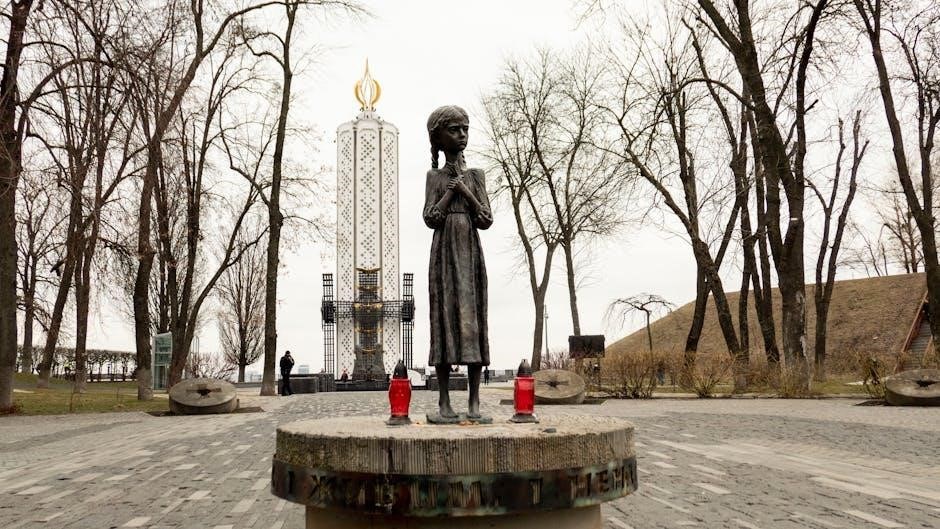
Throughout history‚ famines have tragically recurred‚ impacting societies globally. The “Final Famine Book” contextualizes these events‚ examining their causes and consequences. It highlights the 1921-1923 Soviet famine and the devastating Holodomor (1932-1933)‚ revealing patterns of food scarcity and political influence on food distribution.
The 1921-1923 Soviet Famine: Lessons from a Cold War Perspective
The 1921-1923 Soviet famine‚ explored within the “Final Famine Book’s” scope‚ offers crucial lessons. O.L. Lukoyanova’s 2016 research analyzes this period through a Cold War lens‚ revealing how political ideologies and policies exacerbated the crisis. It demonstrates the dangers of centralized control over food supplies.
The Holodomor (1932-1933): Stalin’s Role and 7 Million Deaths
The Holodomor‚ a devastating famine from 1932-1933‚ resulting in approximately 7 million deaths‚ is a central focus when studying the “Final Famine Book.” Events began in 1929‚ instigated by Joseph Stalin’s policies. This tragedy underscores the horrific consequences of totalitarian control and forced collectivization.
Nutritional Impact of Famine
Famine’s impact extends beyond starvation‚ causing severe nutritional deficiencies. Research‚ like Lukoyanova’s (2016)‚ highlights the critical consequences of maternal malnutrition during pregnancy. These deficiencies lead to long-term health problems‚ impacting generations. Understanding these effects is crucial when exploring the themes within the “Final Famine Book.”
Maternal Malnutrition and its Consequences
Maternal malnutrition during famine has devastating‚ intergenerational effects. Lukoyanova’s (2016) research demonstrates how nutritional deficits in pregnant women profoundly impact offspring health. These consequences include increased susceptibility to disease and developmental delays‚ perpetuating cycles of vulnerability. This critical aspect is central to understanding the “Final Famine Book’s” core themes.
Deficiencies in Foodstuffs and Coping Mechanisms (Selling Belongings)
During famines‚ severe deficiencies in essential foodstuffs are commonplace. Individuals resort to desperate coping mechanisms for survival‚ notably selling personal belongings to acquire food. This practice‚ highlighted in research‚ underscores the extreme economic hardship and resource scarcity inherent in famine situations‚ mirroring themes explored within the “Final Famine Book.”
Food Security in Russia and the USSR: A Historical Analysis
Historical analysis reveals persistent food security challenges in Russia and the USSR‚ exemplified by the famines of 1921-1923 and the Holodomor. Research‚ like Lukoyanova’s (2016)‚ examines these crises‚ linking them to political and economic factors. Understanding this history is crucial when exploring the themes presented in the “Final Famine Book.”
Crisis Management Strategies During Famine

Examining crisis management during famines reveals desperate measures‚ including the sale of personal belongings to obtain food‚ as noted in available research. Integrated data analysis focuses on strategies employed to mitigate famine’s impact and guarantee food security within Russia and the USSR. These approaches are relevant to the “Final Famine Book’s” themes.
Integrated Data on Famine and Food Security Guarantees
The study presents integrated data concerning famine crises and methods for ensuring food security in Russia and the USSR. This analysis‚ crucial to understanding the “Final Famine Book’s” core concepts‚ explores historical responses. It highlights the interconnectedness of famine‚ political systems‚ and the urgent need for proactive guarantees.
Beyond Historical Famines: Modern Food Systems
Examining modern agricultural practices is vital‚ moving beyond historical accounts detailed in resources like Nabhan’s work. Contemporary food distribution networks‚ while advanced‚ still face vulnerabilities. Understanding these systems—and their potential failures—is key to preventing future crises‚ echoing the “Final Famine Book’s” preventative message.
The Relevance of Vavilov’s Research Today
Nikolay Vavilov’s quest to end famine remains profoundly relevant. His work on plant genetic resources‚ detailed in Where Our Food Comes From‚ informs modern approaches to crop diversity and resilience. Facing climate change and global instability‚ Vavilov’s legacy offers crucial insights for ensuring future food security.
Exploring Similar Themes in Fiction (Sci-Fi/Alien Romance ⸺ “The Last Hour of Gann”‚ “Horde King” series)

The anxieties surrounding potential famine resonate within speculative fiction. Works like “The Last Hour of Gann” and the “Horde King” series tap into similar themes of scarcity and survival. The “Four Horsemen” books demonstrate a strong reader engagement with post-apocalyptic narratives and the desire for resolution.
Related Research and Publications (2016-2025)
Recent scholarship illuminates the historical context of famine. Lukoyanova’s 2016 work examines Soviet Russia during the 1921-1923 famine‚ drawing lessons from the Cold War. Iskhakov’s 2025 publication offers philosophical reflections. These studies‚ alongside others‚ explore maternal malnutrition and integrated data on food security guarantees.
Lukoyanova‚ O.L. (2016) ⎼ Soviet Russia and the Famine of 1921-1923
Lukoyanova’s 2016 research analyzes the 1921-1923 Soviet famine‚ framed within a Cold War perspective. The study highlights the critical lessons learned from this period of immense hardship. Cited 33 times‚ it provides valuable insights into the socio-political factors contributing to the crisis and its lasting impact.
Iskhakov‚ R. (2025) ⸺ Philosophical Reflections and Historical Context
R. Iskhakov’s 2025 work offers philosophical insights alongside a robust historical context‚ dedicated to Professor V.F.’s 70th anniversary. The research delves into the search for fundamental truths‚ mirroring Vavilov’s quest. It explores the human condition in relation to scarcity and the enduring quest for sustenance.
The Search for Solutions: Vavilov’s Quest and Modern Approaches
Nikolay Vavilov relentlessly pursued solutions to end famine through plant genetic resources. Modern approaches build upon his legacy‚ utilizing advanced agricultural practices and improved food distribution networks. This section examines how contemporary strategies address food security‚
drawing parallels to Vavilov’s pioneering work and ongoing challenges.
Vavilov’s Legacy in Plant Genetic Resources
Vavilov’s extensive collection of plant seeds remains a cornerstone of global food security. His work highlighted the importance of biodiversity in creating resilient crops. This legacy continues to inform modern breeding programs‚ aiming to develop varieties resistant to disease and climate change‚ ultimately preventing widespread famine.
Modern Agricultural Practices and Food Distribution
Contemporary agriculture relies on intensive farming and global distribution networks. While increasing yields‚ these systems are vulnerable to disruptions – climate events‚ geopolitical instability‚ and economic factors. Efficient food distribution is crucial‚ yet inequalities persist‚ hindering access for vulnerable populations and exacerbating food insecurity risks.
PDF File Analysis: “FÖRK BORG: The Book of Feast and Famine”
The “FÖRK BORG” PDF file‚ weighing 41.7 MB‚ presents intriguing thematic resonance with the “Final Famine” search. Its content‚ though not directly linked to Nabhan’s work‚ explores cycles of abundance and scarcity. Further investigation is needed to determine its relevance to historical famine studies and potential insights.
File Size and Content (41.7 MB)
The “FÖRK BORG: The Book of Feast and Famine” PDF registers at 41.7 MB in size. This substantial file likely contains detailed imagery and extensive text. Analyzing its contents is crucial to ascertain if it offers unique perspectives on famine‚ food security‚ or related historical contexts‚ potentially complementing Nabhan’s research.
Potential Relevance to the “Final Famine” Theme
Given its title‚ “FÖRK BORG: The Book of Feast and Famine” inherently addresses the core theme. The PDF’s content may explore cycles of abundance and scarcity‚ mirroring the anxieties fueling the search for a “Final Famine” solution. Its relevance hinges on whether it offers practical insights or philosophical reflections on preventing widespread starvation.
Homo Sapiens and Early Food Security Challenges
Around 100‚000 years ago‚ Homo sapiens faced intense competition from other hominid species for limited resources. Early humans constantly battled food scarcity‚ a fundamental struggle for survival. This evolutionary context highlights that famine isn’t a modern problem‚ but a deeply ingrained challenge shaping our species’ history and resilience.
The Evolutionary Context of Food Scarcity
Food scarcity profoundly impacted early human evolution‚ driving adaptations for resourcefulness and survival. Our ancestors developed strategies for foraging‚ hunting‚ and preserving food‚ crucial for navigating unpredictable environments. This inherent vulnerability to food shortages shaped both our physiology and behavior‚ creating a lasting legacy of concern for food security.

Early Human Responses to Limited Resources
Faced with limited resources‚ early Homo sapiens‚ among other hominin species‚ exhibited remarkable adaptability. Strategies included nomadic lifestyles following food sources‚ cooperative hunting‚ and the development of rudimentary storage techniques. These responses highlight a fundamental human drive to overcome scarcity‚ laying the groundwork for later agricultural innovations and societal structures.
The “Four Horsemen” Books and the Appeal of Post-Apocalyptic Themes
The popularity of series like “Four Horsemen” demonstrates a strong reader engagement with post-apocalyptic narratives‚ particularly those featuring Famine as a central figure. This appeal stems from a fascination with societal collapse and survival‚ coupled with a desire for narrative closure in the face of overwhelming challenges. These stories explore the psychological impact of scarcity.
Reader Engagement and the Desire for Narrative Closure
Readers drawn to themes of famine and apocalypse often seek a sense of resolution‚ a narrative closure that real-world events rarely provide. This desire fuels engagement with fiction like “The Last Hour of Gann” and the “Horde King” series‚ offering a controlled exploration of extreme scenarios. The quest for understanding drives this engagement.
Exploring the Psychological Impact of Famine in Fiction
Fiction dealing with famine delves into profound psychological trauma – desperation‚ loss‚ and moral compromise. The “Four Horsemen” books exemplify this‚ mirroring the emotional weight of scarcity. These narratives explore how individuals react under extreme duress‚ highlighting the enduring human need for survival and connection‚ even amidst devastation.
Prophet Cannibal and Related Files (Russian Language Resources)
The file “Пророк Людоед ⸺ класс (рус).pdf” represents a chilling cultural perspective on survival. Russian language resources often explore the extreme measures taken during famines‚ including taboo practices; These materials offer a stark contrast to Western narratives‚ revealing the desperation and societal breakdown experienced during periods of acute food scarcity.
Analysis of the File “Пророк Людоед ⸺ класс (рус).pdf”
The “Пророк Людоед” (Prophet Cannibal) file‚ in Russian‚ delves into the darkest aspects of famine survival. Its content likely reflects the psychological and moral compromises forced upon individuals facing starvation. Analyzing this resource provides insight into cultural responses to extreme hardship‚ revealing the desperation and trauma associated with widespread food shortages.
Cultural Perspectives on Famine and Survival
Famine profoundly shapes cultural narratives and survival strategies. The “Prophet Cannibal” file exemplifies a Russian perspective on extreme scarcity‚ hinting at taboo breaches. Societies develop unique coping mechanisms‚ from traditional preservation techniques to desperate measures. Understanding these cultural lenses is crucial for comprehending the human cost of food insecurity.
Diplomacy and Famine: Historical Connections
Historically‚ famine has been intertwined with international relations and diplomatic efforts. Food aid often becomes a tool of foreign policy‚ influencing alliances and power dynamics. Examining past responses – or lack thereof – reveals the complex role of diplomacy in mitigating food crises. Effective international cooperation is vital for preventing widespread suffering.
The Role of International Relations in Food Aid
International relations significantly shape food aid distribution‚ often influenced by political agendas and strategic interests. Diplomatic negotiations determine access to affected regions and the scale of assistance. Food aid can be leveraged to foster goodwill or exert pressure‚ impacting recipient nations. Coordinated global efforts are crucial for effective famine relief.
Historical Case Studies of Diplomatic Responses to Famine
Examining past famines reveals varied diplomatic responses. The 1921-1923 Soviet famine saw limited international aid due to Cold War tensions‚ hindering relief efforts. The Holodomor (1932-1933) faced denial and obstructionism‚ limiting external intervention. Successful aid relies on open communication‚ political will‚ and overcoming ideological barriers for effective humanitarian action.
The Importance of Food Preservation and Storage
Effective food preservation is crucial during scarcity. Historically‚ communities employed methods like drying‚ salting‚ and fermentation to extend shelf life. Modern technologies – canning‚ refrigeration‚ and advanced packaging – offer enhanced preservation. Secure storage protects against pests and spoilage‚ safeguarding vital resources during times of crisis and ensuring food security.

Traditional Methods of Food Preservation
Throughout history‚ communities relied on ingenious preservation techniques. Drying fruits and meats‚ salting fish and vegetables‚ fermenting foods like kimchi and sauerkraut‚ and smoking meats were commonplace. Root cellars provided cool‚ dark storage. These time-tested methods maximized food availability‚ mitigating famine’s impact and demonstrating resourcefulness.
Modern Technologies for Extending Food Shelf Life

Contemporary food preservation utilizes advanced technologies. Canning‚ pasteurization‚ and refrigeration are widespread. Modified atmosphere packaging (MAP) and vacuum sealing extend freshness. Freeze-drying removes moisture‚ creating long-lasting provisions. Irradiation eliminates pathogens. These innovations‚ alongside improved storage infrastructure‚ significantly reduce food spoilage and bolster food security.
Accessing and Utilizing the “Final Famine Book” PDF
The PDF of “Where Our Food Comes From” is accessible via platforms like PDFdrive.to. Users should exercise caution regarding download security. Optimizing the reading experience involves utilizing PDF annotation tools for note-taking and highlighting key passages. Efficient searching within the document is crucial for focused research.
Navigating PDFdrive.to and Similar Platforms
PDFdrive.to offers a vast library of free educational PDFs‚ including resources related to famine studies. Users should be aware of potential download risks and utilize antivirus software. Effective searching requires precise keywords like “Vavilov” or “famine.” Similar platforms may exist‚ demanding careful evaluation of their legitimacy and security.
Optimizing PDF Reading and Annotation
Utilize PDF reader features for enhanced comprehension‚ such as highlighting key passages and adding annotations. Employ search functions to locate specific information within the “Final Famine Book” PDF. Consider using cloud storage for accessibility across devices. Regularly back up the PDF to prevent data loss‚ ensuring continued access to vital research.
The Ongoing Relevance of Famine Studies
Studying historical famines‚ like those detailed in Nabhan’s work and related research‚ remains crucial for modern food security. Understanding past crisis management and Vavilov’s legacy informs present strategies. Analyzing PDFs like “FÖRK BORG” offers unique perspectives. Continued research is vital to prevent future widespread hunger and ensure global stability.